



PunchOut Oracle Procurement: specifics and Magento 2 integration
Oracle Procurement Cloud has its own cXML conventions. This guide covers Oracle specifics, differences with Ariba and Coupa, and the recommended approach for Magento and Adobe Commerce.
In this article
- Oracle Procurement in the e-procurement landscape
- The PunchOut flow with Oracle
- Differences with Ariba and Coupa
- Oracle credentials
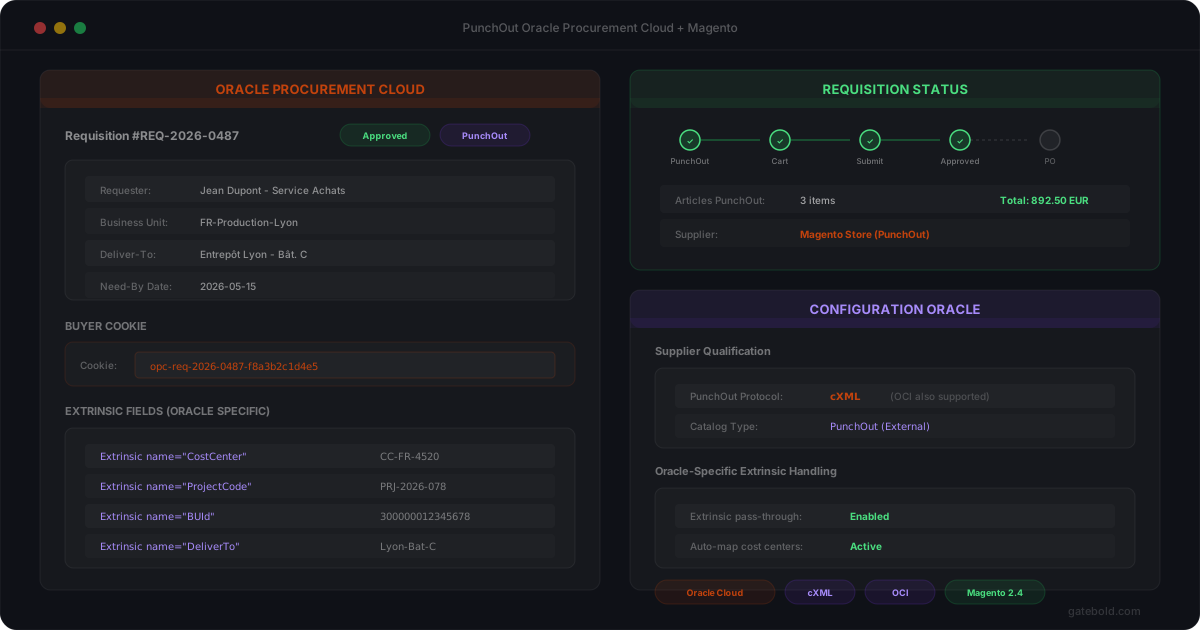
- The enriched BuyerCookie
- Oracle Extrinsic fields
- Oracle-specific pitfalls
- 1. Amount formatting
- 2. Character encoding
- 3. Catalog vs off-catalog management
- 4. Shorter timeouts
- Testing with Oracle Procurement
- How Gatebold handles Oracle
- Summary
Oracle Procurement Cloud is the third most common procurement system in PunchOut projects, after SAP Ariba and Coupa. Used by large organizations that already have an Oracle ecosystem (ERP Cloud, Fusion), it has its own conventions when it comes to cXML.
Oracle Procurement in the e-procurement landscape
| System | Estimated share of PunchOut requests |
|---|---|
| SAP Ariba | ~50% |
| Coupa | ~25% |
| Oracle Procurement | ~15% |
| Jaggaer, others | ~10% |
If your client is a large organization with Oracle as their ERP, they will likely use Oracle Procurement Cloud (formerly Oracle iProcurement) for purchasing. And they will ask you for a PunchOut connection via cXML.
The PunchOut flow with Oracle
The flow follows standard cXML, but Oracle has a few particularities:
Oracle
Sends a PunchOutSetupRequest (cXML, Oracle identifiers)
Supplier
Validates the credentials, creates a session
Supplier
Returns the session URL
Requisitioner
Browses the catalog, builds their cart
Catalog
Sends the cart via the connector
Supplier
Builds the PunchOutOrderMessage and sends it
Oracle
Creates an internal requisition for approval
Differences with Ariba and Coupa
| SAP Ariba | Coupa | Oracle | |
|---|---|---|---|
| Credentials | ANCI + SharedSecret | SharedSecret | Identity + SharedSecret |
| BuyerCookie | Standard | Standard | Often enriched |
| Extrinsic | Variable | Variable | Oracle-specific |
| Edit mode | Supported | Heavily used | Supported |
| Sandbox | Via invitation | CSP built-in | Via Oracle Cloud |
| DTD | Standard | Standard | Standard + extensions |
Oracle credentials
Oracle uses the same cXML credentials mechanism (From, To, Sender) but identifiers are often structured differently:
- The
From > Identitycontains the client’s Oracle identifier (not an Ariba ANCI) - The
To > Identitycontains your supplier identifier as configured in Oracle - The
SharedSecretis defined in Oracle Procurement administration
The enriched BuyerCookie
Oracle tends to include more information in the BuyerCookie than other systems. This cookie - which you must return as-is in the PunchOutOrderMessage - may contain requisition identifiers, tracking codes, and Oracle metadata.
Oracle Extrinsic fields
Oracle expects specific Extrinsic fields in the PunchOutOrderMessage that do not exist in Ariba or Coupa:
UniqueName- Oracle internal identifier for the productIsAdHoc- indicates whether the item is off-catalog- Accounting codes and cost centers specific to Oracle
These fields must be configured in the per-buyer mapping.
Oracle-specific pitfalls
1. Amount formatting
Oracle can be strict about the number of decimal places and the separator. A price of 45.5 instead of 45.5000 can cause issues depending on the client’s configuration.
2. Character encoding
Oracle Procurement Cloud is sensitive to UTF-8 encoding of product descriptions. Special characters (accents, cedillas) must be correctly encoded in the XML.
3. Catalog vs off-catalog management
Oracle distinguishes between “catalog” items (referenced in Oracle) and “ad hoc” items (unreferenced). The PunchOutOrderMessage must indicate whether each item is one type or the other via Extrinsic fields.
4. Shorter timeouts
Oracle Procurement often enforces shorter session timeouts than Ariba. A requisitioner who hesitates too long on your store loses their session.
Testing with Oracle Procurement
Testing is typically done in your client’s Oracle Cloud environment:
- The client creates a supplier account for you in their test Oracle Procurement
- You configure your credentials (Identity, SharedSecret)
- The client or you trigger a test PunchOut
- You validate the session and cart return
- The client verifies the requisition created in Oracle
Observability of exchanges is critical: Oracle does not always provide explicit error messages. Seeing the exact cXML payload exchanged enables fast diagnosis. For the complete method and the Status codes to recognize, see our guide on debug cXML: common errors.
How Gatebold handles Oracle
Gatebold supports Oracle Procurement Cloud with:
- Oracle credentials: validation of Oracle-specific identifiers
- BuyerCookie: full preservation, no modification
- Oracle Extrinsic fields: configurable in the per-buyer mapping
- UTF-8 encoding: guaranteed on all outgoing payloads
- Amount precision: configurable per connection
The same Magento connector serves Oracle, Ariba, and Coupa - the difference is in the connection configuration in Gatebold, not in the code.
Summary
Oracle Procurement Cloud is the third major player in PunchOut. Its specifics (credentials, Extrinsic fields, enriched BuyerCookie) require dedicated per-buyer configuration, but the flow remains standard cXML. If your client is on Oracle, integration is entirely feasible - provided you anticipate Oracle conventions from the start.
If you have an Oracle client asking for PunchOut on Magento, let’s discuss it. For the plan details, see our E-Procurement pricing.